Cognitive Dissonance: Your Brain's Sneaky Little Trauma Protector (That Also Keeps You Stuck in Hell)
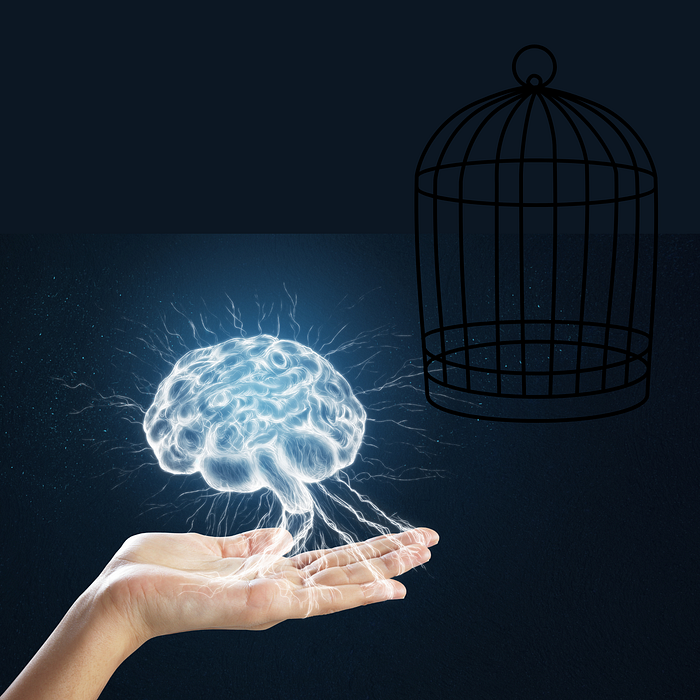
Ever found yourself justifying the unjustifiable? You know, like telling yourself that the man who just called you “too sensitive” for crying after he humiliated you in public didn’t really mean it? Or that your partner, who has the emotional range of a potato, does love you — he just “shows it differently” (like by ignoring you for three days straight). Congratulations, my dear, you’ve met cognitive dissonance — your brain’s twisted way of protecting you from trauma while simultaneously gluing you to it like an industrial-strength adhesive.
What the Hell Is Cognitive Dissonance?
Cognitive dissonance is what happens when your brain is desperately trying to hold two completely opposing beliefs at the same time without imploding. It’s the mental gymnastics you perform when the reality in front of you smacks you in the face, but accepting it would mean dismantling the fairytale you’ve been clinging to for dear life.
Example?
- Belief #1: My partner loves me.
- Belief #2: My partner just called me an idiot and ruined my birthday.
Your brain: Welp, that doesn’t add up… Let’s fix it by creating Belief #3!
- Belief #3: He was just stressed. He didn’t mean it. He’s actually a great guy.
BOOM. Problem solved. Except… not really.
Why Does Your Brain Do This?
Because it thinks it’s helping you. Trauma, especially the kind wrapped up in an abusive relationship, is dangerous to confront head-on. Your brain is wired to protect you from threats, and if accepting reality would shatter your world (and force you to face the terrifying truth that you might need to leave), your mind bends over backward to make reality seem less awful than it actually is.
Cognitive dissonance helps you avoid the gut-wrenching pain of realizing you’re being mistreated. But at the same time, it keeps you stuck in a cycle of denial, rationalization, and hope that somehow, someday, things will get better. Spoiler alert: they won’t.
Cognitive Dissonance + Trauma Bonding = The Perfect Storm
If cognitive dissonance is the glue that keeps you in an abusive relationship, trauma bonding is the chain that locks you in.
Trauma bonding happens when the same person who causes you pain is also the one who soothes it — creating an addictive, emotional rollercoaster from hell. It’s why you feel that high when they suddenly love-bomb you after treating you like garbage for a week. It’s why you cling to the “good times” even though they’re about as rare as a solar eclipse.
And guess what fuels this toxic cycle? Ding, ding, ding — cognitive dissonance. Your brain erases the bad moments to preserve the illusion of a “good relationship,” keeping you hooked like a gambler who swears the next hand will be the winning one.
Case in point…when my youngest daughter was just 3 months old my husband and I got our first place together (before that I, and the 3 kids, had been living with my mom while he had been living…actually I’m ashamed to admit I’m not even sure where he was living). Things immediately became violent, a sign that he had never really shown to me personally in the 4 years we had been together. In desperation and confusion I went to a crisis counselor — until he found out and blocked that.
Fast forward about 7 years (yep that long) and I was back. They still had my file and began to read back to me some of the horrific things my husband had put us through — things I had disclosed when I first became a client. One incident in particular occurred when I tried to leave the first time. He had begged me to talk to him, which I finally relented to. Drove me to the seawall by our house, smashed my face into the window, and told me if I ever tried to leave him again he would make sure I disappeared into that water and that people would just think I had “run off again”.
That night the kids and I returned to my family’s shock and dismay, and thus began our odyssey of trying to get free.
The shocking part of this is that I had completely forgotten that incident until they read it back to me. My brain had created some kind of amnesia to protect me from that which I could not accept.
So How Do You Break Free?
- Get brutally honest with yourself. Write down every moment of mistreatment and STOP sugarcoating it. If your best friend told you this was happening to her, what would you say? Exactly.
- Catch yourself making excuses. If you hear yourself saying, “But he’s really stressed!” or “She had a rough childhood!” stop. Ask yourself: Would a healthy person treat me this way, no matter their circumstances? Spoiler: No.
- Understand that love should NOT feel like mental gymnastics. Real love doesn’t require you to twist reality to make it palatable. If your brain is working this hard to justify someone’s behavior, that’s your sign.
- Seek support. Whether it’s therapy, a support group, or that one friend who always sees through the BS, surround yourself with voices that remind you of your worth.
- Take action. You can’t heal in the same environment that’s making you sick. Start planning your exit strategy, whether that’s emotional, physical, or financial. Even baby steps count.
Final Truth Bomb
Cognitive dissonance isn’t your enemy — it’s just doing its job. But you have the power to override it. You don’t have to keep living in a twisted reality where “love” feels like pain, confusion, and walking on eggshells. The moment you see the truth for what it is and refuse to gaslight yourself into staying, you take your power back. And that, my dear, is when you start reclaiming your freedom.
You deserve more than a love that makes you question your sanity. You deserve peace. You deserve safety. And you deserve a life that doesn’t require mental gymnastics to make it bearable.
So go get it. 💥
Join the Radiant Souls Newsletter!
Snark. Sass. Inspiration. And (Mostly) Helpful Tips & Recipes!
You’re fabulous, but let’s be honest — life can be a hot mess express. That’s where I come in. Sign up for my weekly(ish) newsletter, packed with just the right amount of snark, sass, and straight-up inspiration to keep you feeling empowered, laughing through the chaos, and maybe even whipping up a recipe that won’t set off the smoke alarm.


Comments
Post a Comment